602.449.7980
 1747 E Morten Ave #205 Phoenix AZ 85020

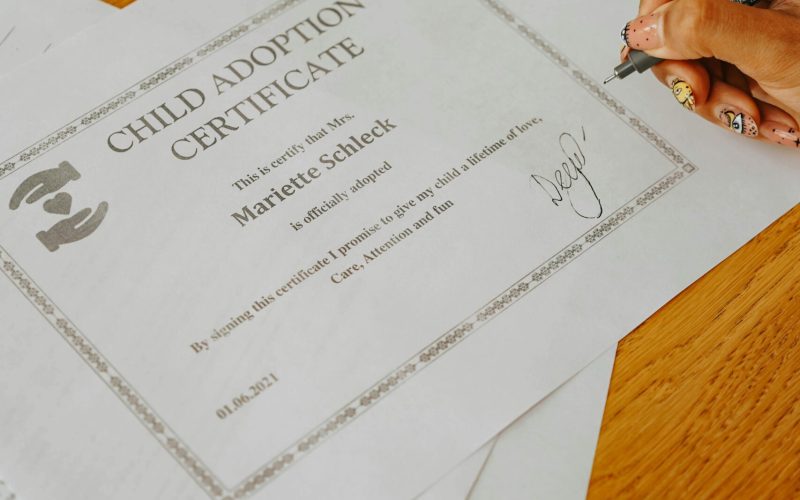
By Ryan T. McGuire
In 2020, Paul Petersen pled guilty to running an illegal adoption ring. Petersen was the former Maricopa County Assessor and an attorney in Mesa, Arizona. He arranged for pregnant women from the Republic of the Marshall Islands to travel to the United States, paid them a $10,000 stipend plus postpartum payments, and charged adoptive families a range from $30,000-$40,000 per adoption. [1]
Petersen broke several laws, including alien smuggling, Medicaid fraud, and violations of the Compact of Free Association. He exploited vulnerable women and profited from trafficking children. Petersen was not an outlier. Although there are many well-meaning foster parents, adoptive parents, and professionals working in the placement system, adoption also has a dark side of exploitation and corruption.
The Market
Why is there such corruption? The demand far outstrips supply and the fees are substantial. According to the CDC’s National Center for Health Statistics, from 2015–2019, approximately 3.1 million women between the ages of 18 and 49 took steps to adopt a child, while only about 800,000 women successfully adopted. [2] TIME estimated that around 1 million U.S. families are looking to adopt at any given time, but best available estimates peg annual nonrelative infant adoptions at roughly 13,000 to 18,000. [3] According to the Child Welfare Information Gateway, the cost of private adoption services typically ranges from $30,000 to $60,000. [4] Together, these figures reveal a market where supply is radically constrained and fees are largely unregulated.
The Middlemen
A major problem in adoption is widespread deceptive advertising from unlicensed facilitators. In September 2024, the FTC sent letters to 31 adoption intermediaries warning them against misleading consumers regarding placement rates and times, suppressing negative reviews, and engaging in other unfair or deceptive practices that harm prospective adoptive or birth parents. [5]
These letters illustrate the often-obfuscated fact that there are licensed adoption agencies and unlicensed adoption intermediaries. Licensed agencies are regulated and may legally facilitate the full adoption process. Unlicensed intermediaries are middlemen who connect adoptive parents and expectant mothers. Their main function is advertising. They are unregulated and therefore may charge as much as they wish.
Coercion by Design
In her article “Adoption As Substitute for Abortion?,” Professor Malinda L. Seymore argues that adoption is presented as a clean substitute for abortion, but that framing depends on ignoring the realities of pregnancy, childbirth, and the structural pressures that push people into adoption. [6] Adoption supporters often portray adoption as a moral alternative to abortion. However, this view downplays the impact that racism, patriarchy, and poverty have on the shape of the adoption system. In particular, Seymore reports that mothers in closed adoptions are more likely to describe their decision to place as coerced and that, in one study, over half of birth mothers described their adoption experience as predominantly negative — feelings that, for many, persisted up to thirty years later. [6]
This negative reaction should not be surprising. Adoption agencies typically provide housing and financial support for expectant mothers. This may appear ostensibly generous but clearly functions as leverage over mothers. Expectant mothers are allowed to change their mind at any point until relinquishment, but how easy is it to refuse when the agency is paying for your housing and expenses? Pregnant women are not as free to refuse to give their child up for adoption as the system advertises.
Across Borders
Adoption demand also reaches across borders, but the era of high-volume intercountry adoption has effectively ended. According to the National Council For Adoption, intercountry adoptions to U.S. families peaked at 22,988 in 2004 and fell to just 1,275 in 2023 — the lowest number on record. [7] Some of that decline reflects pipelines the United States has effectively closed. The State Department lists Cambodia, for example, as a country where intercountry adoptions with the United States are not currently possible. [8] The Petersen case itself reached across borders by drawing pregnant women from the Marshall Islands into the United States through immigration channels created under the Compact of Free Association.
What Reform Looks Like
With such widespread issues, lawmakers and scholars are pushing for significant changes to protect expectant mothers and children. At the state level, California’s Department of Social Services has confirmed that Assembly Bill 120 repealed the state’s Adoption Facilitator Program. Facilitators on the Adoption Facilitator Registry as of July 1, 2023 were required to cease operations by December 31, 2023, and the provision of adoption-facilitator services in California has been prohibited since January 1, 2024. [9]
At the federal level, the ADOPT Act represents a concrete effort to establish oversight. Introduced in the House on November 20, 2025, the bill’s stated purposes are to protect families from exploitation by unlicensed adoption intermediaries, ensure access to licensed and regulated providers, and prevent the commodification of children in private domestic interstate adoption. The bill’s text is highly specific. It would criminalize certain paid adoption-intermediary services and adoption advertising outside of specified licensed or authorized actors, and bar payments of more than $2,500 in furtherance of an adoption before the placing parent consults a licensed child-placing agency or attorney licensed in the placing parent’s state. [10]
Scholar-driven reforms echo these legislative efforts. The National Council For Adoption — through researchers Drumm, Davi, and Hanlon — has called for federal legislation requiring accurate annual reporting of private domestic adoptions and for discretionary federal and state funding to support adoption-informed education for healthcare workers, social workers, and other professionals who counsel expectant parents. [7] Both reforms aim to give vulnerable families better data and better information from sources outside the agency payroll.
The Commodification Problem
These reform sources echo a shared, structural argument that the current system is dangerously flawed. The FTC’s warning letters show that federal regulators already see deceptive, fee-driven intermediary practices as a serious consumer-protection problem. Similarly, the ADOPT Act explicitly identifies preventing the commodification of children as a primary legislative goal. When profit drives adoption, children become commodities. This is a clear structural failure in the idealized adoption system. The Paul Petersen case, the FTC’s flagged intermediaries, and closed foreign adoption pipelines all reflect the same pattern of exploitation in the modern unregulated adoption market. The adoption system generates massive profits, and without meaningful regulation, it attracts exactly the kind of actors willing to exploit it.
Sources:
[3] Tik Root, The Baby Brokers: Inside America’s Murky Private-Adoption Industry, TIME (June 3, 2021).
[4] Child Welfare Info. Gateway, Planning for Adoption: Knowing the Costs and Resources (June 2022).
[6] Malinda L. Seymore, Adoption As Substitute for Abortion?, 95 U. Colo. L. Rev. 1089 (2024).
[8] U.S. Dep’t of State, Intercountry Adoption: Cambodia (last updated Jan. 24, 2025).
[9] Cal. Dep’t of Soc. Servs., Adoption Facilitator (last visited May 7, 2026).
Author:
Ryan T. McGuire is a law clerk at Woodnick Law PLLC and a third-year student at the Sandra Day O’Connor College of Law. He leverages his master’s degree in philosophy to produce thorough legal research and writing, with a focus on family law matters. Ryan brings a strong foundation in legal analysis and academic interests spanning family, juvenile, and criminal law.